
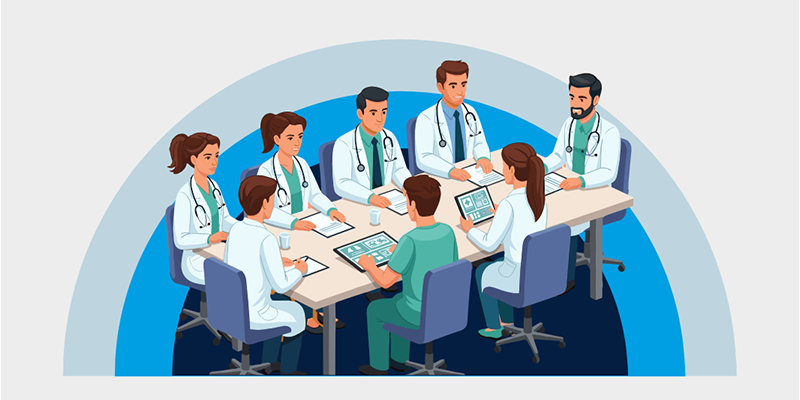
As technology continues to reshape the healthcare landscape, the role of the CMIO is expanding beyond just software delivery. Today’s informatics leaders are increasingly responsible for ensuring that technology actually works for users – supporting efficiency, reducing cognitive burden and enabling high-quality patient care.
In this Becker’s Healthcare Podcast episode, uPerform CMO Dr. Stephanie Lahr sits down with Dr. Bryan Jarabek, CMIO at M Health Fairview, to discuss how health IT leaders can better support clinicians as they navigate an increasingly complex digital work environment through a modernized education strategy. At the center of the conversation: a fundamental shift away from one-time, event-based training towards asynchronous, ongoing learning.
From Go-Lives to Continuous Learning
Dr. Jarabek describes how Fairview’s shift to asynchronous learning embedded in the workflow marked a fundamental change in how the organization supports clinicians. This training model moves away from one-time go-lives and classroom sessions, instead emphasizing a continuous learning model that meets clinicians where they are – both in terms of timing and skill level.
Rather than expecting clinicians to retain everything from a single training event, Fairview designed learning as an ongoing journey. Short, targeted, role-based learning assets are delivered in the flow of work and reinforced over time, helping users move from novice to mastery at a sustainable pace. The shift has increased clinician trust in change, improved the training experience and resulted in steady EHR satisfaction improvements over the last seven years.
Start Small, Then Scale
For organizations looking to replicate Fairview’s success, Dr. Jarabek emphasized the importance of starting small and scaling intentionally. Fairview initially started their move to asynchronous training with smaller groups and specific workflows. This allowed the organization to test assumptions, gather feedback and refine content before expanding the approach across roles and departments.
Once proven, the real power came from reusability. Core learning assets could be adapted and scaled across different roles, reducing duplication while maintaining relevance.
Key takeaway for CMIOs: You don’t need to overhaul everything at once. Start asynchronous learning in targeted areas, then scale what works.
Free Educators to do What Only Humans Can Do
One of the most impactful outcomes of Fairview’s approach was how it changed the role of trainers and educators. By shifting foundational knowledge and repeatable training into asynchronous formats, Fairview was able to free up educators for higher-value, high-touch activities, such as:
- One-on-one coaching
- At-the-elbow support and rounding
- Supporting clinicians through moments of disruption
This balance – digital learning at scale, paired with human support where it matters most – proved critical to clinician adoption and trust.
Apply This Beyond the EHR
While Epic was a major focus, Dr. Jarabek was clear that this learning approach shouldn’t stop with the EHR. As health systems adopt and upgrade technology – from ambient speech to AI-driven workflows – the need for scalable, consistent learning only grows. An asynchronous learning strategy allows informatics leaders to create a unified education framework across the entire health IT ecosystem, rather than reinventing training for each system.
Keys to Success: What Informatics Leaders Should Prioritize
Throughout the conversation, Dr. Jarabek shares several core principles as essential for success:
- Invest in a well-designed training platform: A strong platform is foundational. Learning must be easy to access, intuitive and embedded in daily workflows, not another system clinicians have to hunt for.
- Choose an asynchronous strategy: Asynchronous learning respects clinicians’ time and variability in schedules. It enables learning when it’s needed most, not just when it’s offered.
- Personalize learning from novice to mastery: Effective programs offer clear learning pathways that evolve with the user, supporting onboarding, optimization and ongoing mastery, rather than a one-and-done model.
- Pair digital learning with high-touch support: Asynchronous content scales knowledge, but trust is built through human connection. Coaching, rounding and peer engagement remain critical.
- Focus on change management best practices: Dr. Jarabek emphasized the importance of consistently communicating the “why.” Sharing peer success stories, highlighting wins and reinforcing value over time helps sustain adoption. Programs like smart user groups or change agent networks can amplify these efforts by turning clinicians into advocates.
- Learn from your community: No organization is navigating this alone. Dr. Jarabek encouraged CMIOs and informatics leaders to actively participate in professional communities and peer networks, such as uPerform’s uPerForum community, to share lessons learned and help accelerate programs.
- Prepare for AI-driven change: As AI continues to transform healthcare, leaders must become familiar with how it can streamline processes and reduce burden. Just as importantly, they must be ready to educate and support clinicians through these changes, using the same scalable learning principles.
Learn More: Fairview’s Results, Validated by KLAS Research
For healthcare leaders who want to take a deeper dive into Fairview’s outcomes, Fairview’s latest KLAS case study provides an independent look at how this modern approach to health IT education has delivered measurable results.
The Big Picture: Learning, Change and Culture Move Together
As healthcare leaders face accelerating transformation – from AI to growing tech stacks to AI-driven innovation – the conversation highlights a critical insight: technology succeeds when learning, change management and culture move forward together.
By rethinking education as a continuous, asynchronous and human-centered experience, CMIOs and informatics leaders can build trust, reduce friction and ensure digital transformation truly supports the people delivering care.
Related Articles
PODCAST: How CMIOs are Redefining Health IT Education
As technology continues to reshape the healthcare landscape, the role of the CMIO is expanding beyond just software delivery. Today’s informatics leaders are increasingly responsible for ensuring that technology actually works for users – supporting efficiency, reducing cognitive burden and…

Panel Discussion: Getting health IT training on the radar of your clinical leaders
A lot of people are working hard to improve the healthcare experience for patients and providers alike. And that’s a great thing. However, it also means that training teams are competing for the resources and…
AI & the future of healthcare training
Artificial Intelligence (AI) has been all the rage this year, and uPerform is joining the conversation. Tune into this Becker’s Healthcare podcast episode to hear Dr. CT Lin, CMIO at UCHealth, and Bobby Zarr, VP…
Unlocking Efficiency: Your Guide to Just-in-Time Training
As organizations work to keep pace with rapid technology change, just-in-time training (JIT training) has emerged as a practical and scalable learning strategy. It delivers support when and where users need it — in the…
Derek Harley of M Health Fairview on taking a marketing approach to EHR education
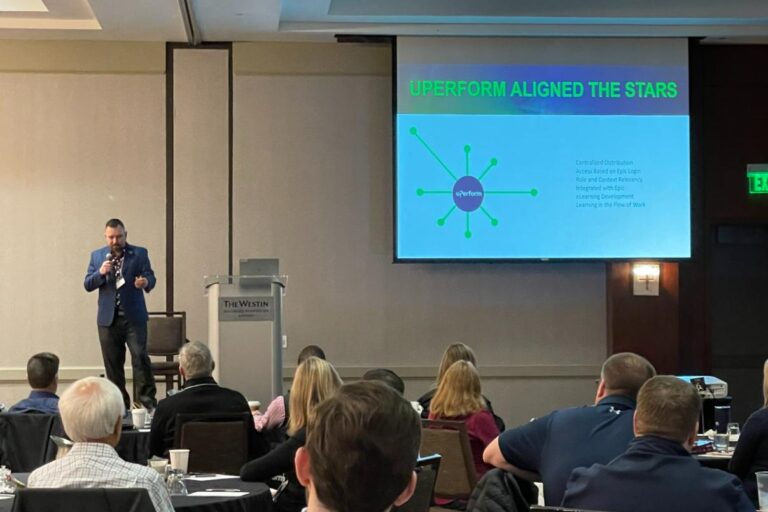
For Derek Harley, EHR education is all about meeting the learner where they are. Harley is the EHR/HIT Learning and Development Manager of M Health Fairview, a 10-hospital health system and client of uPerform. With…

The ‘digital black bag’: Just-in-time training for the future of healthcare
The Electronic Health Record (EHR) and the digitalization of healthcare has drastically transformed the daily role of physicians, resulting in great benefits but also frustration. Tune into this podcast, hosted and moderated by Millennium Live,…

Driving digital adoption with consumer-centric learning
Traditionally, organizations have approached digital adoption as a means of providing staff with the software skills and knowledge they need to perform their job effectively. This approach often involves delivering training in a top-down manner,…

The benefits of in-app learning: the next frontier of asynchronous learning
Asynchronous learning has quickly become a mainstay in L&D organizations across industries. The ability to allow people to learn when and how they prefer not only became a necessity during the COVID-19 Pandemic, but it…
Support clinicians while they work with uPerform
uPerform is helping health systems around the world redefine the way they deliver training, providing learning opportunities in the flow of work at the moment of need. Our clients report improved satisfaction, greater efficiency, better adoption and time and cost savings. Contact us today to learn how uPerform can help your organization deliver quality IT education at scale.