

How 15 health systems are scaling EHR training with lean teams, earning executive buy-in, and keeping learning relevant long after go-live: key takeaways from uPerForum Boulder 2026.
Education leaders are being asked to do far more than run training programs. They are expected to ready thousands of users for constant change, prove impact to executives, and do it all with lean teams. The best answers rarely come from a vendor roadmap. They come from peers who are already finding success.
That is what the uPerForum community is built for. In September, 100 education and enablement leaders from 43 health systems joined us in Boulder, Colorado for our fifth annual user group summit, where 15 client organizations shared what worked, what didn’t, and what they would do differently.
This year’s theme challenged health systems to “Be Boulder,” and the conversations delivered. Here are the themes that matter most for education leaders shaping their strategy for 2027 and beyond.
Key takeaways for healthcare education leaders:
- Treat EHR education as a continuous service, using learner feedback and search data to decide what to build next.
- Market learning like a campaign: audience before content, behavior before completion.
- Scale lean teams by automating production work and keeping experts focused on strategy and clinical judgment.
- Unite training in one learning ecosystem, with role-based content tailored to each group’s needs.
- Earn buy-in through stories, deliberate communications, and early partnership with operations.
Shift EHR Education From Go-Lives to Continuous Enablement
The strategic question in Boulder was not how to train for go-lives. It was how to build an education function that keeps pace with an EHR that never stops changing.
Reposition education as an ongoing service, not a project
One regional health system shared how it keeps training relevant long after launch. Its centralized team earns operational trust through direct relationships: rounding, joining operational meetings, and working side-by-side with operations as part of the team. Every course runs through a validation loop of SME review, stakeholder sign-off, and close attention to learner surveys. When nurses said one course needed to be more interactive, the team rebuilt it, and the next round of feedback showed learners enjoyed the change.
Market it, or nobody will adopt it
Derek Harley of Fairview Health Services (Minneapolis, Minnesota) delivered one of the most-quoted lines of the summit: “Nobody is waiting for your course.” Attention is opt-in now, even inside the firewall, and completion is “a compliance metric wearing a learning costume.” He challenged leaders to borrow four bearings from marketing:
- Audience before content
- Benefits before features
- Campaign before course
- Behavior before completion
“Our job is not to create learning. Our job is to create behavior change.”
Give every project one front door and steer with real-time data
One health system made operations a co-creator of its multi-year Epic redesign. Monthly “Change Tuesdays” previewed small changes to build confidence early, and every resource lived in one Learning Pathway, promoted everywhere from email signatures to digital signage. During go-live, usage and search reports showed who was preparing. One week later: 2,000+ Learning Pathway views and just four how-to help desk tickets. As one surgeon put it, “I don’t usually like change, but this time I do.”
That feedback loop doesn’t have to end at go-live. Search engagement reports show what users are actually asking, and usage reports show which teams are engaging and which aren’t. Those signals tell the team where to build new resources, add FAQs, and direct support, so user searches decide what gets built next.
Scale Your EHR Training Program: Capacity, Standards, and Lean Teams
Mergers, acquisitions, and Community Connect partnerships are raising the stakes. The organizations scaling well have made deliberate decisions about capacity and standards.
Scale the team you have by putting people where they matter most
Fairview Health Services tackled a question every education leader faces: how do you grow output without growing headcount? Their team sends repetitive production work, like first-draft storyboards, formatting, and asset creation, to automation and AI-assisted tools, while authors and subject matter experts own strategy, clinical accuracy, and judgment. In one quarter, the team modernized 815 learning assets and published 113 new content pieces, and drafting for one clinical series dropped from two to three days to two hours. The goal is not replacing people but extending how far each person’s expertise can reach.
Build one cohesive learning ecosystem
One health system is supporting two EHRs at once while preparing for an Epic go-live in 2027. Rather than maintaining two separate training worlds, the team united them on a single learning platform, with shared naming conventions, modular design, and governance spanning both systems. Everyone learns from the same source, and updates stay synchronized as workflows evolve. The result: about 40% less duplicate content, 25% faster course builds, with learner satisfaction reaching 90%.
Scale one lean team to meet the unique needs of two organizations
When Gundersen Health System and Bellin Health merged to form Emplify Health (Green Bay and La Crosse, Wisconsin), the Epic consolidation didn’t land the same way on both sides. The two organizations ran different Epic instances, learning ecosystems, and training methods, and each faced different changes by role, region, and application. Using role- and application-based Learning Pathways from one central hub, a 30-person training team gave each group exactly what its own changes required. Across two staggered go-lives, they educated more than 14,000 employees and saw a 333% increase in users accessing training.
Audit before you optimize
Boulder also featured uPerform PULSE, our platform optimization program, which evaluates library structure, content governance, group assignments, search performance, and end-user experience. Every attending organization received a personalized PULSE report card, and the session laid out a structured, six-month path from findings to measurable improvement.
Drive EHR Adoption: Earn and Keep Executive Support
Wednesday’s main stage spoke directly to the part of the role that rarely shows up in a job description: influence.
Lead with a story, back it with data
Dr. CT Lin, Professor at the University of Colorado School of Medicine and author of It’s Not About the Tech, led a hands-on storytelling workshop. His open notes data failed to change minds for years, until the right stories did. Attendees left with two tools for their next executive update: the 5-C story framework and the “And, But, Therefore” structure.
“No one ever made a decision because of a number. They need a story.”
Focus on what you can control, and match the format to the need
One health system started from a sobering reality: most change initiatives fail because of people, not process. Instead of fighting decisions outside their control, the team focused on what they could shape: training format, communication, and persistent effort toward buy-in. For an Epic upgrade affecting 300+ users in a two-week window, they paired instructor-led sessions with hands-on simulations, simplified overview simulations that explained the “why” for occasional users, and provided a structured Learning Pathway. The clearest sign it worked: departments that once resisted started requesting new courses and simulations on their own.
Treat communications as part of the training plan
When Baptist Health (Jacksonville, Florida) moved to Epic Secure Chat, the team mapped real clinical workflows first and brought super users, frontline clinicians, and even likely skeptics in from the start. They built a single, role-based Learning Pathway and pointed every communication channel to it. The pathway has logged more than 9,000 training views, and Secure Chat topped 1 million messages in July. Dr. Rhiannon Doherty’s takeaway: “Do not create more places to look. Create more ways to reach the right place.”
Win operations over before you build
ACCESS Community Health Network (Chicago, Illinois) shared how partnering with operational leaders reshaped its approach to Epic training. The team now brings operations to the table early, schedules training around call volume cycles, and completes a “pre-op checklist” before building any curriculum: validate workflows, confirm training windows, define role-based depth, identify champions, and plan post-go-live reinforcement.
Expanding the Mandate: Where Education Teams Are Going Next
Education teams are extending their reach well beyond EHR onboarding and raising their strategic profile in the process.
- Removing access barriers. Instead of buying 50+ phones for training, one health system converted its Epic mobile workflows into hands-on simulations, saving more than $50,000 and cutting new-employee onboarding time in half.
- Turning efficiency training into a competition. Fairview’s “Epic Madness,” a five-week, March Madness-style tournament where clinicians watched and voted on 32 Epic efficiency tips, drew 478 participants. 56% of participating physicians and APPs built a new SmartPhrase, and providers got back 8 to 12 minutes of time in system.
- Owning professional development, not just IT training. One large health system moved nursing competencies from paper to uPerform, with a library of 45 role-based resources linked from the LMS, intranet, Microsoft Teams, and Epic. Support inquiries dropped after launch.
The common thread: education leaders who position their teams as enablement partners for the whole organization are earning a bigger seat at the table.
Celebrating Our 2026 uPlause Award Winners
Wednesday’s main stage closed with the uPlause Awards, recognizing the people and teams who are setting the pace for education in their organizations. Congratulations to this year’s winners:
- Top Innovator: Fairview Health Services
- Top Adopter: UCHealth
- Fastest Implementation: INTEGRIS Health
- Top Content Creators by Cohort:
- Small System: Children’s Nebraska
- Medium System: Froedtert ThedaCare Health
- Large System: Jefferson Health
- Top Platform Engagement by Cohort:
- Small System: Monument Health
- Medium System: Baptist Health Jacksonville
- Large System: Fairview Health Services
We also finally got to celebrate Emplify Health in person for their 2025 uPlause Awards: Top Adopter and Top Platform Engagement.
Thank you for raising the bar for the entire community!
Why This Community Matters
Candor like this is hard to find in a case study. Education leaders everywhere face the same pressures: constant change, lean teams, and proving value. uPerForum exists so no one has to solve them alone.
Thank you to every speaker, panelist, and attendee who made Boulder our best summit yet. Presentations, resources, and session recordings are available now in the uPerForum Community on the Intelligence Hub. uPerform clients who want to walk through their uPerform PULSE report card can submit a ticket to schedule a review.
The momentum continues in Chicago, September 21-23, 2027. We hope to see you there.
Not yet a uPerform client? See how health systems use uPerform to scale EHR training with lean teams, or talk with our team about your next go-live.
COMPLIMENTARY RESOURCE
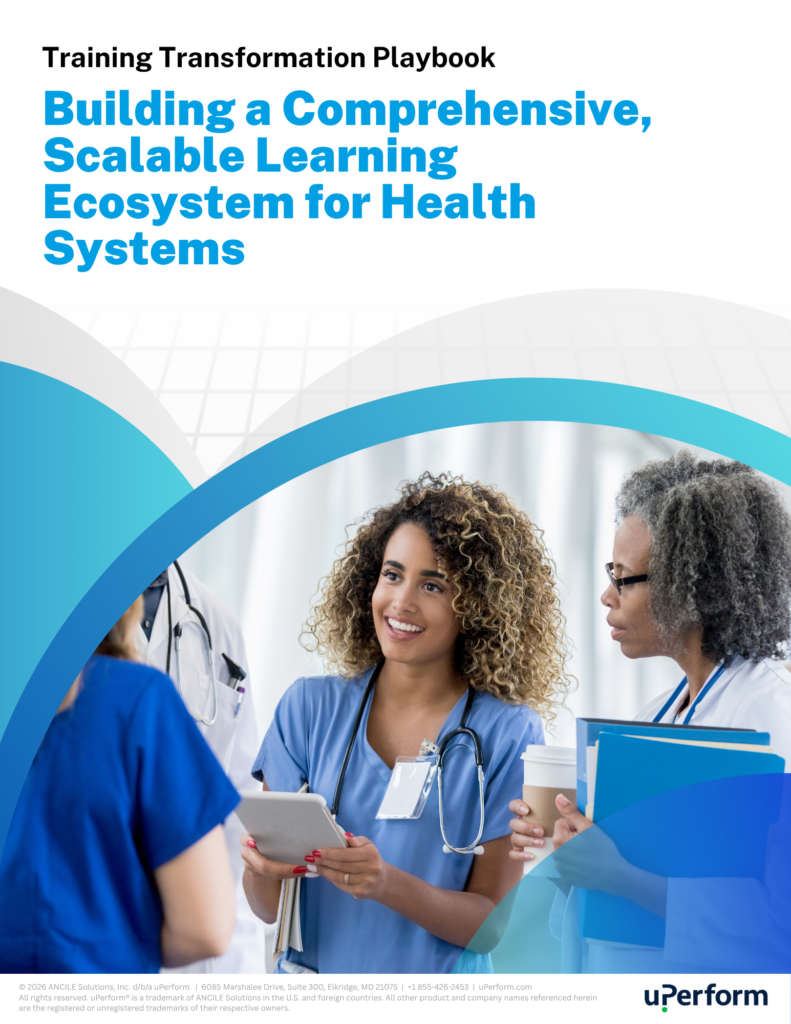
The Training Transformation Playbook
Ready to take your training program further? This playbook gives health system education leaders a strategic framework for scaling EHR education, proving impact, and building programs that keep pace with constant change.
Access to the Training Transformation Playbook is reserved for employees of health systems.
Related Articles

Epic Secure Chat Rollout: How Baptist Health Jacksonville Drove Adoption
A people-first change management approach turned a high-stakes communication platform switch into a model for EHR adoption When Baptist Health Jacksonville replaced its legacy communication platform with Epic Secure Chat, the rollout wasn’t just a…
Where to Find Epic Training for End Users
Epic training for end users is primarily delivered through healthcare organizations with limited options available online or without system access. This guide is for individual Epic users, job seekers, and healthcare professionals looking to learn…

New Epic Gold Stars requirements and how to earn them
Epic® shared new requirements for its Gold Stars program at its UGM event in August. The program initially focused on whether organizations were live with certain Epic applications and functionality. Now, the leading EHR will…

Epic Training for Health Systems: A Complete and Scalable Guide
This guide is for health systems and organizations responsible for training staff on Epic. Looking for Epic training as an individual user? Read our article Where to find Epic training for end users. Epic training is…

Epic onboarding with uPerform
Looking for ways to get new hires through Epic onboarding faster? As resource-strapped health systems race to onboard an influx of new hires, learning applications like uPerform offer a streamlined solution for creating and delivering…
Optimizing Epic Learning Home Dashboards with uPerform
Many health systems are leveraging Learning Home Dashboards to deliver a better Epic® training experience to users. While they can be a great way to improve access to important content and communications, managing numerous Learning Home…
How to create Epic tip sheets with uPerform
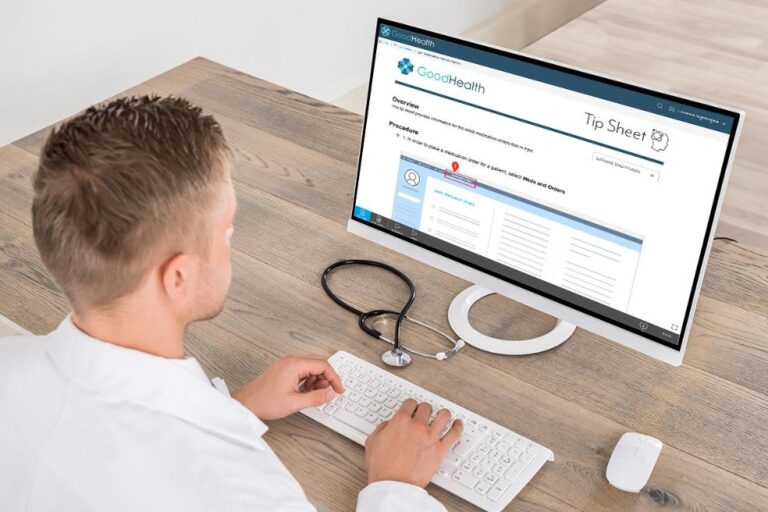
Epic tip sheets are a great way to help users through workflows and tasks in Epic Systems EHR software. Whether a user is performing a task for the first time or needs a quick refresher,…

Epic training for nurses: how to scale amid rising staff shortages
As hospitals and healthcare systems search for ways to combat the rising costs of the nursing workforce shortage, one key area to focus on is improving Epic® training for nurses. Comprehensive Epic training drives proficiency,…

Preparing staff for the transition to Epic Hyperdrive
Epic® Hyperdrive is here, and most health systems have already made the transition. Epic’s new web-based client is expected to improve user experience, add client deployment flexibility and simplify Epic upgrades. If you have…

Integration Guide: Epic in-app training with uPerform
Take your Epic® software training to the next level with learning in the flow of work. uPerform is a just-in-time training and support platform that provides users with customized Epic in-app training materials. With multiple…
PODCAST: 9 Tips for transitioning to a virtual Epic training strategy from Anne LaFlamme, CNIO at M Health Fairview
This is one chapter in Fairview’s ongoing story. Since this post was published, Fairview has gone on to transition 100% of staff to asynchronous onboarding and save $2M annually in training costs. See the full…